
The global skincare industry is growing faster than ever, and entrepreneurs worldwide are turning to South Korea to build their beauty brands. Korea has built a reputation as the world’s most advanced cosmetics manufacturing hub, backed by decades of research, innovation, and product development expertise. If you are planning to launch your own skincare line, working with a trusted Korean cosmetics OEM manufacturer is one of the smartest decisions you can make from day one.
This guide walks you through exactly how to get started, what to expect, and why Korea remains the top destination for skincare brand founders across the globe.
Why Korea Is the Right Starting Point for Your Skincare Brand
South Korea sits at the center of global skincare innovation. Korean manufacturers invest heavily in research, ingredient technology, and production standards that meet global regulatory requirements. Whether you are building a clean beauty brand, a clinical skincare line, or a premium anti-aging range, Korean factories have the infrastructure, talent, and ingredients to bring your vision to life.
Beyond technology, Korea is also known for speed. Products move from concept to sample faster here than in most other countries. This matters when you are trying to launch in a market where consumer trends shift quickly and timing is everything.
For indie founders and growing beauty companies alike, the Korean OEM manufacturing ecosystem offers flexible entry points, including low minimum order quantities, pre-developed formulas, and full customization paths depending on your budget and brand goals.
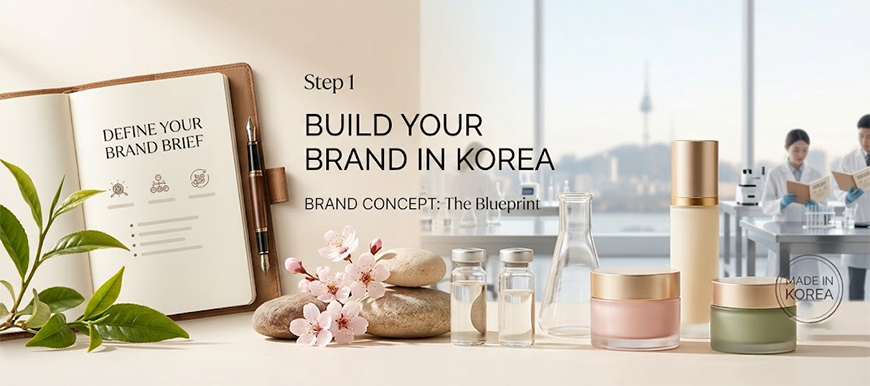
Step 1: Define Your Brand Before You Contact a Manufacturer
One of the biggest mistakes new founders make is reaching out to a manufacturer without a clear brand brief. Before you begin any conversation with a production partner, you need to answer a few key questions:
- Who is your target customer?
- What skin concerns does your product address?
- What is your positioning, premium, clinical, natural, or accessible?
- How many SKUs are you planning to launch with?
- What is your budget for development and first production run?
Having clarity on these points before your first meeting will save time and help you communicate your requirements clearly. Manufacturers can guide you better when they understand where your brand is headed.
Step 2: Choose Between OEM and ODM Manufacturing
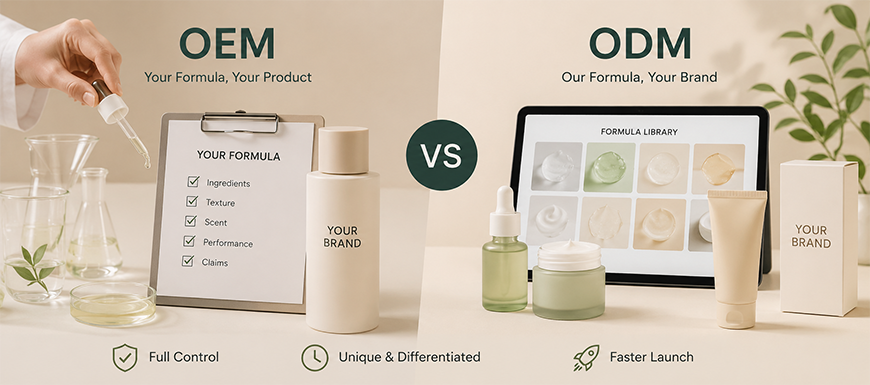
When you begin exploring K-beauty contract manufacturing, you will quickly encounter two primary models: OEM and ODM.
OEM (Original Equipment Manufacturing) means you bring your own formula or detailed product brief, and the manufacturer produces it to your specifications. This path gives you the highest level of control over ingredients, texture, scent, and performance claims. It is ideal for brands that want a fully proprietary product.
ODM (Original Design Manufacturing) means you select from a library of pre-developed formulas and customize the branding, packaging, and labeling. It is faster, more affordable, and lower risk, especially for first-time founders. Many successful brands start with ODM to test the market and transition to OEM as they grow.
Both paths are available through full-service Korean manufacturing partners, and the right choice depends on your budget, timeline, and how much product differentiation matters to your launch strategy.
Step 3: Prioritize Custom Skincare Formulation
If your goal is to build a brand that stands apart in a crowded market, formula is where that differentiation begins. Custom skincare formulation Korea gives your brand access to some of the most advanced active ingredients available in the beauty industry today.
Korean formulators work with a wide range of cutting-edge ingredients including PDRN, exosomes, fermented extracts, peptide complexes, and biotech-derived actives. These are not standard ingredients you will find on every shelf. They represent the next generation of skincare science, and Korean labs have been working with them fodjqanr years.
When you choose custom formulation, you also have full control over:
- Ingredient sourcing and concentration levels
- Product texture, finish, and skin feel
- Fragrance or fragrance-free profile
- Stability and shelf-life targets
- Regulatory documentation for your target markets
Custom formulation requires more upfront investment and a longer development timeline, but the result is a product that is entirely yours and built to perform.
Step 4: Work with a Reliable Korean Beauty Brand Development Partner
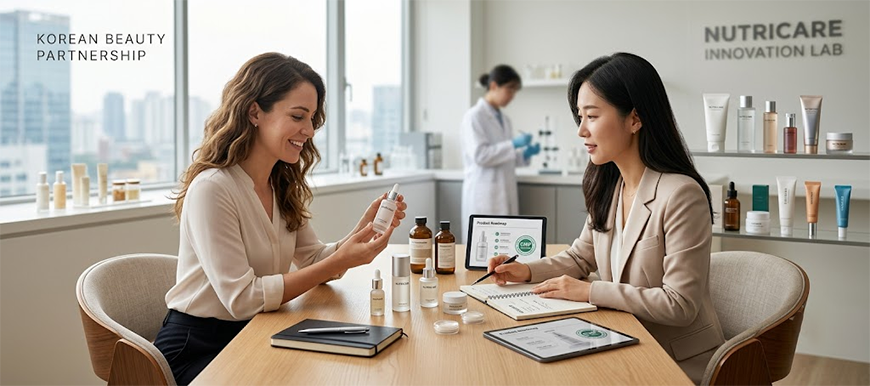
Manufacturing is only one piece of launching a skincare brand. The best Korean production relationships go well beyond filling bottles. A true Korean beauty brand development partner will work with you across formulation, packaging selection, regulatory guidance, and product testing.
At Nutricare Cosmetic, this is exactly the kind of relationship we build with every client. We work with brands at every stage, from founders launching their first product to established companies expanding their line into new categories. Our team supports the full development journey, not just the production side of it.
When evaluating a potential manufacturing partner, look for these qualities:
- Clear and responsive communication throughout the process
- Transparent pricing with no hidden development fees
- Experience working with international brands and export requirements
- Certifications such as GMP, ISO 22716, or CGMP
- A strong portfolio of completed products across multiple categories
These factors separate a manufacturer from a true brand partner.
Step 5: Understand the Production Timeline and MOQ
When you start a skincare brand Korea OEM route, the timeline from concept to finished product typically falls between three and six months for custom formulation projects. ODM projects can move faster, sometimes within six to ten weeks, depending on packaging lead times and formula approvals.
Minimum order quantities in Korea vary by manufacturer and product type. Many mid-size factories offer MOQs starting from 500 to 3,000 units per SKU, which makes Korean manufacturing accessible to smaller brands and startups. It is important to confirm MOQ expectations early in the conversation so you can plan your cash flow and inventory accordingly.
Step 6: Plan for Packaging and Compliance Together
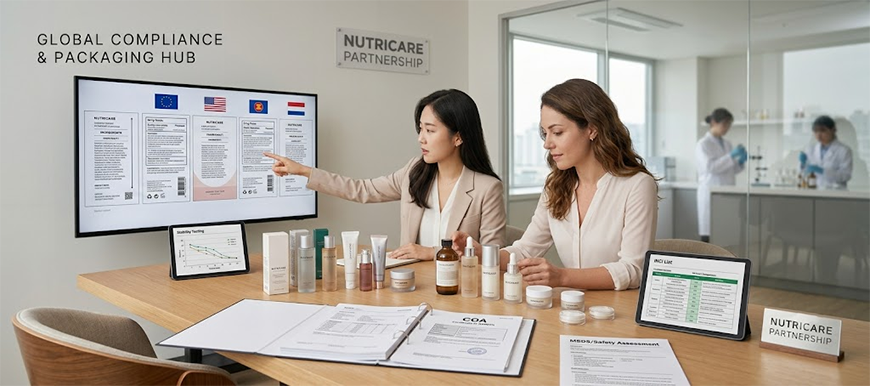
Packaging and regulatory compliance should never be an afterthought. Korean manufacturers with strong packaging development capabilities can help you select compatible containers, finalize label artwork requirements, and prepare documentation for markets such as the EU, USA, GCC, and Southeast Asia.
Make sure your manufacturing partner can provide:
- Certificate of Analysis (COA) for each production batch
- Safety Assessment or MSDS where required
- INCI ingredient lists formatted for your target market
- Stability testing reports
These documents are essential for listing products on major retail platforms and entering regulated markets internationally.
Final Thoughts
Building a skincare brand from scratch is not a small undertaking, but it becomes significantly more manageable when you have the right Korean manufacturing partner in your corner. Korea offers the technology, the ingredients, the speed, and the expertise that modern skincare brands need to compete globally.
At Nutricare Cosmetic, we have helped brands across Asia, the Middle East, Europe, and beyond bring their skincare visions to life through full-service OEM and ODM manufacturing. If you are ready to take the first step, our team is here to guide you from concept to finished product.
Frequently Asked Questions
Q1. What is the difference between OEM and ODM in Korean skincare manufacturing?
OEM means you provide the formula and the manufacturer produces it. ODM means you choose from pre-made formulas and rebrand them. OEM offers more customization while ODM is faster and lower cost for new brands.
Q2. How long does it take to launch a skincare product through a Korean OEM manufacturer?
Custom OEM projects typically take 3 to 6 months from brief to finished product. ODM projects can be completed faster, often within 6 to 10 weeks depending on packaging and approvals.
Q3. What is the minimum order quantity for Korean skincare OEM manufacturing?
MOQs vary by manufacturer and product type. Many Korean factories start from 500 to 3,000 units per SKU, making it accessible for small and indie brands entering the market for the first time.
Q4. Can a Korean OEM manufacturer help with packaging and regulatory documentation?
Yes. Full-service Korean manufacturers like Nutricare Cosmetic provide packaging guidance, INCI lists, Certificate of Analysis, stability reports, and compliance documents for international markets including EU, USA, and GCC.
Q5. Is custom skincare formulation in Korea suitable for small brands?
Absolutely. Korean manufacturers offer flexible development paths for brands of all sizes. Whether you need a single hero product or a full skincare range, custom formulation options are available to fit different budgets and timelines.