
The ampoule and serum category sits at the most commercially exciting intersection of the global skincare market. Consumer demand for concentrated, targeted treatment products has grown consistently over the past several years, and the brands that are winning in this space are those built around genuinely advanced formulations delivered through professional-grade manufacturing partnerships.
For beauty brands looking to enter or expand within this category, South Korea is the most capable and commercially proven manufacturing source available anywhere in the world. Korean ampoule and serum OEM production combines ingredient access, formulation science, and production quality at a standard that consistently outperforms what other manufacturing regions can offer across this specific product type.
This blog covers everything brands need to understand about Korean ampoule serum OEM production before they begin their development journey, from format selection and ingredient strategy through MOQs, production timelines, and what to look for in a manufacturing partner.
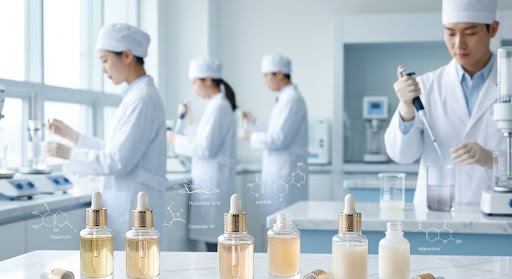
Why Ampoules and Serums Are Korea’s Strongest OEM Category
Korea did not just popularize the ampoule and serum format globally. It perfected it. The multi-step Korean skincare routine places concentrated treatment serums and ampoules at the center of the routine, and decades of consumer demand within the Korean domestic market have driven manufacturers to develop formulation capabilities in this category that are genuinely unmatched globally.
Korean consumers are among the most ingredient-educated and results-oriented skincare buyers in the world. The domestic market pressure this creates has pushed Korean manufacturers to continuously advance their ampoule and serum formulation technology, incorporating newer actives faster, stabilizing more complex ingredient combinations, and delivering superior sensory experiences than competitors in other regions.
For international brands, this means that partnering with a Korean ampoule serum manufacturer gives access to formulation expertise and ingredient technology that has been refined through years of serving one of the world’s most demanding skincare markets. The products coming out of Korean OEM manufacturing in this category are not average. They are built to the standard that Korean consumers expect, which is considerably higher than what most other markets have historically demanded.
Understanding the Different Ampoule and Serum Formats Available Through Korean OEM
Before beginning any ampoule or serum OEM development project, brands need to understand the range of formats available and how each one suits different product positioning and consumer preferences.
Watery Essence Serums: High water content, extremely lightweight formulas that absorb almost instantly and work best for hydration, brightening, and first-essence positioning. These are the lightest texture in the serum category and are typically applied as the first treatment step after cleansing and toning. They suit brands targeting younger consumers or those building minimalist, multi-step-lite routines.
Gel Serums: A slightly more substantial texture than watery essences, gel serums provide a satisfying slip and glide on the skin while still absorbing quickly without residue. They work well across hydrating, brightening, and soothing formulation categories and suit a broad range of skin types including oily and combination skin consumers who want treatment benefits without heaviness.
Oil-Serum Hybrids: A growing format that blends the active delivery of a serum with the nourishing skin feel of a facial oil. These work particularly well for anti-aging, barrier repair, and dry skin formulation categories. They are gaining strong traction in markets where consumers are moving toward richer, more nourishing treatment products in place of separate oil and serum steps.
Concentrated Ampoules: The most intensive format in this category, ampoules deliver the highest active ingredient concentrations in a fast-absorbing, often viscous texture designed for targeted treatment use. They are positioned as intensive course treatments or daily actives for consumers who prioritize visible results above all else. The ampoule format commands the highest retail price points in the serum category and delivers the strongest product story for ingredient-led brands.
Bifunctional and Multi-Phase Ampoules: An advanced format gaining traction in premium Korean OEM production, these formulas contain two phases or chambers that are mixed at the point of use to prevent incompatible actives from degrading each other during storage. This format is particularly relevant for brands working with sensitive actives like pure vitamin C or exosome technology.
Ingredient Strategies That Drive Korean Ampoule OEM Development
The ingredient selection for an ampoule or serum is the most important development decision a brand will make. In Korean OEM manufacturing, the breadth and quality of ingredient options available to brands is one of the strongest differentiators from other manufacturing regions.
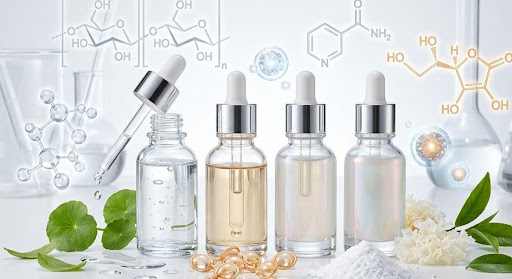
Hydration-Focused Ampoules: For brands building around hydration, Korean hydrating ampoule OEM formulations work with layered hydration systems combining multiple molecular weight hyaluronic acid complexes, beta-glucan, snow mushroom polysaccharides, and sodium PCA. This multi-layer approach delivers hydration at different skin depths simultaneously, producing both immediate plumping effects and sustained moisture retention that consumers can feel throughout the day.
Multi-Vitamin Ampoules: One of the most commercially successful formats in recent Korean OEM development, multi-vitamin ampoules combine several vitamin actives targeting different skin concerns within a single concentrated formula. Korean multi-vitamin ampoule private label options available through Nutricare Cosmetic’s MD Nature line deliver a combination of vitamins targeting dullness, uneven texture, and early signs of aging in a format that appeals strongly to consumers seeking multi-benefit treatment products that simplify their routine without compromising on active ingredient delivery.
Exosome Serums: Representing the current frontier of Korean biotech ampoule formulation, exosome serum manufacturer capabilities in Korea are significantly more advanced than in other manufacturing regions. Korean labs have been working with exosome technology long enough to develop reliable stabilization and delivery systems that preserve the bioactivity of these delicate nanoscale vesicles through production and shelf life. For brands targeting the premium anti-aging or regenerative skincare market, exosome ampoule formulations represent a genuinely differentiated product category with strong consumer interest and growing scientific credibility.
Brightening and Vitamin C Ampoules: Stabilized vitamin C derivatives combined with niacinamide, arbutin, and tranexamic acid form the backbone of brightening-focused Korean ampoule formulations. Korean formulators have extensive experience managing the stability challenges that vitamin C in particular presents, developing delivery systems that maintain potency while preventing the oxidation and discoloration issues that affect less well-formulated vitamin C products.
What Brands Need to Understand About Korean Ampoule OEM MOQs and Pricing
One of the most common questions brands ask when exploring Korean ampoule and serum OEM manufacturing is what minimum order quantities and pricing structures they can expect. Understanding this upfront prevents budget surprises later in the process.
For ampoule and serum formats in Korean OEM production, MOQs typically start from 1,000 to 3,000 units per SKU depending on the manufacturer, the formula complexity, the packaging format, and whether the project is ODM private label or custom OEM. Manufacturers specifically structured to support indie and growing brands often have more flexible entry points than large-scale industrial facilities whose production lines are optimized for high-volume output.
Pricing for Korean ampoule OEM production is influenced by several factors including the active ingredient costs, packaging selection, fill volume, batch size, and the level of customization involved. Brands should request a detailed cost breakdown covering development fees, sample costs, stability testing fees, tooling charges for custom packaging if applicable, and per-unit production pricing at their expected order volume. Transparency around these costs from the beginning of the relationship is a strong indicator of a trustworthy manufacturing partner.
Wholesale and Bulk Ampoule Vitamin Options for Distributors and Retailers
Beyond individual brand development, Korean ampoule manufacturing also serves distributors, retailers, and wholesale buyers looking to source high-quality vitamin ampoule products at scale. Korean vitamin ampoule skincare wholesale sourcing through established Korean manufacturers gives wholesale buyers access to professionally formulated, stability-tested, and fully documented products that can be sold through retail, professional, or direct-to-consumer channels.
For wholesale buyers, key considerations include consistency across production batches, availability of full regulatory documentation for target markets, minimum wholesale order quantities, and the manufacturer’s ability to maintain consistent supply across growing demand. Korean manufacturers with established wholesale programs typically have streamlined documentation processes and dedicated account management for wholesale clients, making the sourcing relationship significantly more efficient than working with factories that primarily serve single-brand OEM clients.
The Production Process: What to Expect from Start to Finish
Understanding the full production journey for a Korean ampoule or serum OEM project helps brands plan their timelines and manage their development process more effectively.
Brief and Formulation Direction: The process begins with a detailed product brief covering your target skin concern, desired texture and finish, key active ingredients or ingredient categories, packaging format preferences, fill volume, and target retail price point. The more specific this brief, the more accurately your Korean OEM partner can propose a formulation direction that meets your needs without excessive revision rounds.
Sample Development: Your manufacturer’s formulation team develops initial lab samples based on your brief. These are sent for your evaluation covering texture, skin feel, absorption speed, scent if applicable, and initial performance impression. Plan for two to four sample revision rounds before reaching a formula you are ready to progress to stability testing.
Stability and Compatibility Testing: The approved formula undergoes accelerated and real-time stability testing to confirm it remains safe and effective throughout its intended shelf life. Compatibility testing with the chosen packaging confirms the formula does not interact with or degrade when in contact with the container material. For exosome and other sensitive bioactive formulas, additional testing may be required to confirm ingredient bioactivity is maintained through the testing period.
Packaging Finalization and Label Compliance: Packaging selection should happen in parallel with formulation development to prevent timeline delays. Label artwork is finalized and reviewed for regulatory compliance in your target market before printing.
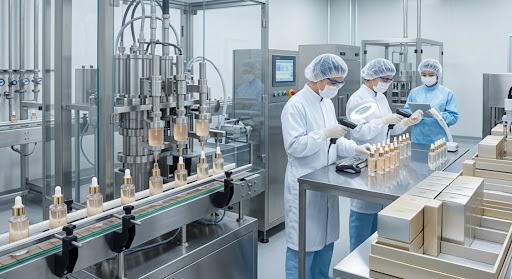
Production and Quality Control: Full production runs begin with in-process quality checks at multiple stages. Final batch testing confirms all specifications are met before release. Batch documentation including Certificate of Analysis is prepared and provided before shipment.
Choosing the Right Korean Ampoule OEM Partner for Your Brand
Not every Korean manufacturer is equally well equipped for ampoule and serum OEM production at a professional level. The concentration of active ingredients in these formats, the stability challenges they present, and the high consumer expectations for texture and performance in this product category all demand a manufacturer with genuine specialist expertise rather than generalist production capabilities.
When evaluating potential Korean ampoule OEM partners, look for demonstrated experience across multiple ampoule and serum product types in their portfolio, clear certifications including GMP and ISO 22716, transparent communication and project management processes, international export experience relevant to your target markets, and the ability to provide detailed ingredient and stability documentation.
At Nutricare Cosmetic, our ampoule and serum OEM capabilities are demonstrated through our own MD Nature and Hyangbi product lines, which showcase the formulation quality and ingredient expertise we bring to every brand development project. Our team supports brands through every stage of the ampoule and serum development process, from initial formulation strategy through to finished product delivery and regulatory documentation, giving our brand partners the manufacturing foundation they need to compete confidently in this demanding and commercially rewarding product category.
Frequently Asked Questions
Q1. What is the difference between an ampoule and a serum in Korean OEM skincare manufacturing?
Ampoules are more concentrated treatment formulas with higher active ingredient levels, typically positioned as intensive treatments. Serums are lighter daily-use formulas with moderate active concentrations. Both are available through Korean OEM manufacturing across a wide range of formats and ingredient strategies.
Q2. What MOQ should brands expect for Korean ampoule and serum OEM production?
MOQs for Korean ampoule and serum OEM typically start from 1,000 to 3,000 units per SKU depending on the manufacturer, formula complexity, and packaging format. Manufacturers catering to indie and growing brands often offer more flexible entry points than large-volume industrial facilities.
Q3. How long does Korean ampoule OEM development take from brief to finished product?
Custom ampoule OEM projects typically take three to five months from initial brief to finished product, including formulation development, revision rounds, stability testing, packaging finalization, and production. ODM private label projects can move significantly faster depending on formula availability and packaging lead times.
Q4. Can Korean OEM manufacturers produce exosome ampoules for private label brands?
Yes. Korean manufacturers are among the most experienced globally in exosome serum and ampoule formulation. Their advanced stabilization and delivery systems make them the most reliable source for brands wanting to incorporate exosome technology at a professional formulation level.
Q5. What documentation should a Korean ampoule manufacturer provide with each production batch?
Brands should receive a Certificate of Analysis for each finished batch, stability testing reports for the approved formula, INCI ingredient lists formatted for target market labeling, compatibility testing results, and any additional regulatory documentation required for their specific target export markets.