
The indie beauty movement has changed the global skincare landscape permanently. Consumers are actively seeking out smaller, more authentic brands over mass-market giants, and this shift has created a genuine window of opportunity for independent founders who want to build skincare brands with real formulation quality, clear ingredient transparency, and a distinct brand identity.
For most indie beauty founders, building a brand from scratch without a manufacturing facility or a team of in-house chemists means finding the right production partner. And for a growing number of those founders, that search ends in South Korea. K-beauty private label for indie beauty brands has become one of the most accessible and commercially viable routes to launching a professional-grade skincare line without the capital investment that traditional brand building once required.
This guide walks you through everything you need to know before taking your first step into K-beauty private label manufacturing as an indie brand founder.
Why Indie Brands Are Choosing K-Beauty Private Label Over Other Routes
The appeal of K-beauty private label manufacturing for indie brands goes well beyond the quality of Korean formulations, though that quality is undeniably a significant factor. There are several practical reasons why independent founders consistently choose Korean manufacturing over alternatives in other regions.
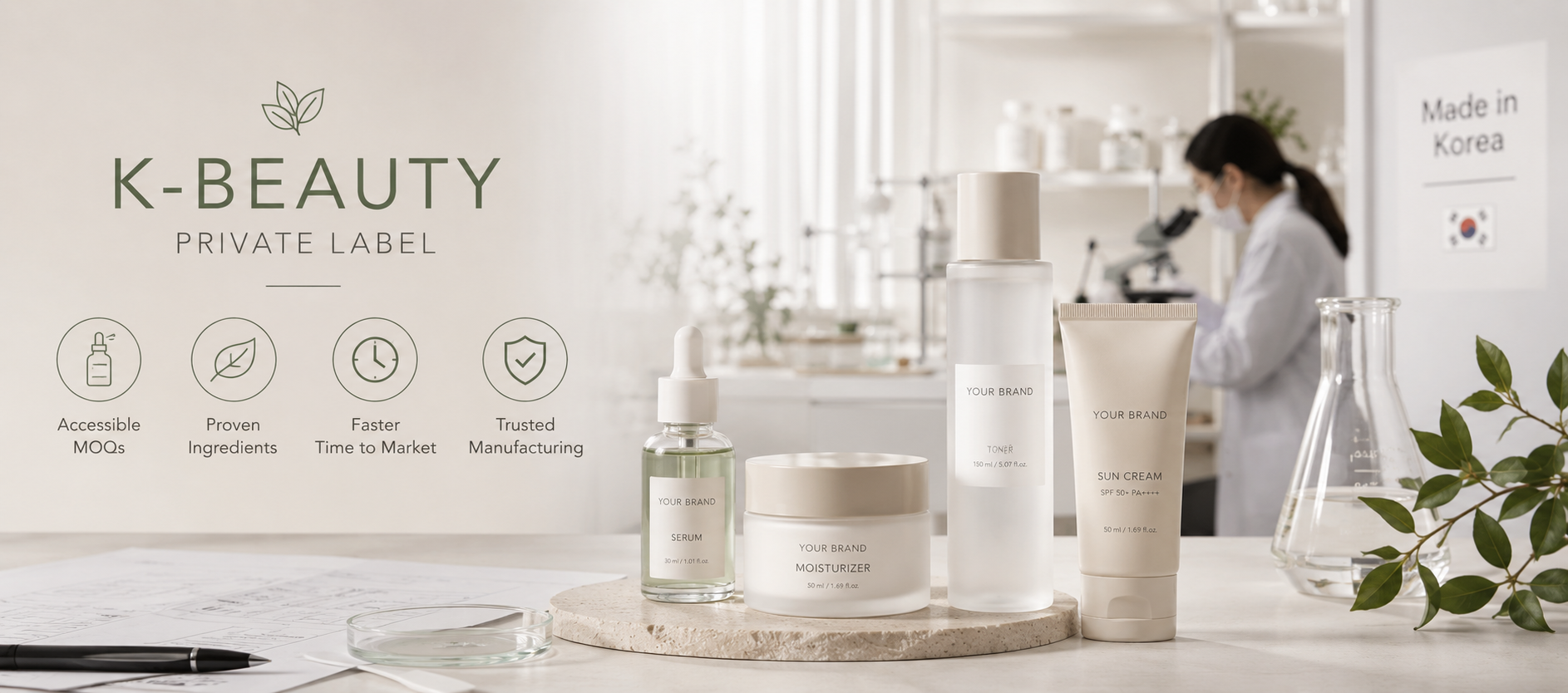
Formulation depth at accessible MOQs: Korean manufacturers have developed flexible entry points specifically to accommodate smaller brands. Many offer minimum order quantities that make professional-grade Korean formulation accessible without requiring the kind of capital commitment that large-volume production demands. This means indie founders can launch with a focused, well-formulated product line rather than overextending their budget on inventory they cannot move quickly.
Ingredient credibility: The K-beauty ingredient ecosystem gives indie brands access to actives that carry strong consumer recognition and genuine scientific backing. Ingredients like ceramides, niacinamide, fermented extracts, peptides, and PDRN are not just trending right now. They are backed by real research and deliver results that build consumer loyalty and repeat purchase behavior.
Speed to market: Korean ODM manufacturing in particular allows indie brands to move from concept to finished product significantly faster than custom formulation from scratch would allow. This speed advantage is meaningful in a trend-driven market where timing is often the difference between leading a category and following it.
Manufacturing credibility: Launching a skincare brand with a Korean cosmetics OEM manufacturer gives your brand an immediately credible production story. Consumers and retailers increasingly recognize Korean manufacturing as a mark of quality, and this recognition transfers directly to brands that source production there.
Step One: Get Clear on Your Brand Before Anything Else
The most common and costly mistake indie beauty founders make is rushing into manufacturer conversations without a clear brand foundation. Before you contact a single Korean manufacturer, you need to be clear on the following:
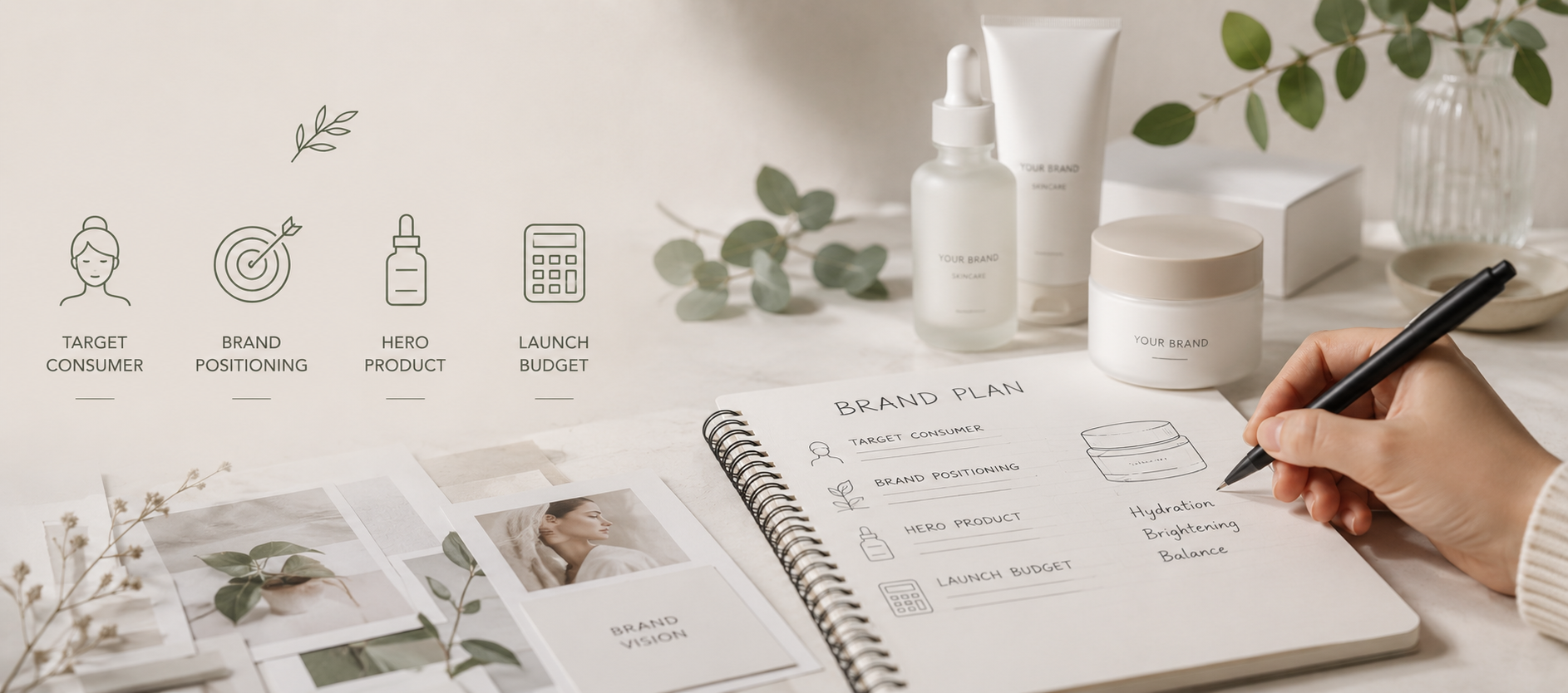
Your target consumer: Who are you building for? What are their primary skin concerns, their lifestyle, their values around ingredients and sustainability, and their budget for skincare? The more specifically you can define your consumer, the more precisely your manufacturing partner can guide your formulation direction.
Your brand positioning: Are you building a clean beauty brand, a clinical skincare line, a K-beauty inspired routine, or a luxury treatment brand? Your positioning determines which ingredient categories, product formats, and price points are most relevant for your development conversations.
Your hero product: Most successful indie skincare launches are anchored by one strong hero product that clearly communicates the brand’s value proposition. Identify what that product is before you start development conversations. Everything else in your line can be built around it over time.
Your launch budget: Be honest with yourself about what you can realistically invest across formulation development, stability testing, packaging, labeling, regulatory preparation, and first production run. Korean manufacturers can work with a range of budgets, but knowing yours upfront helps them guide you toward the most appropriate development path.
Step Two: Understand the Private Label Models Available to You
When you begin exploring K-beauty private label skincare manufacturing, you will encounter two primary models. Understanding the difference between them before your first manufacturer conversation saves significant time and prevents confusion later in the process.
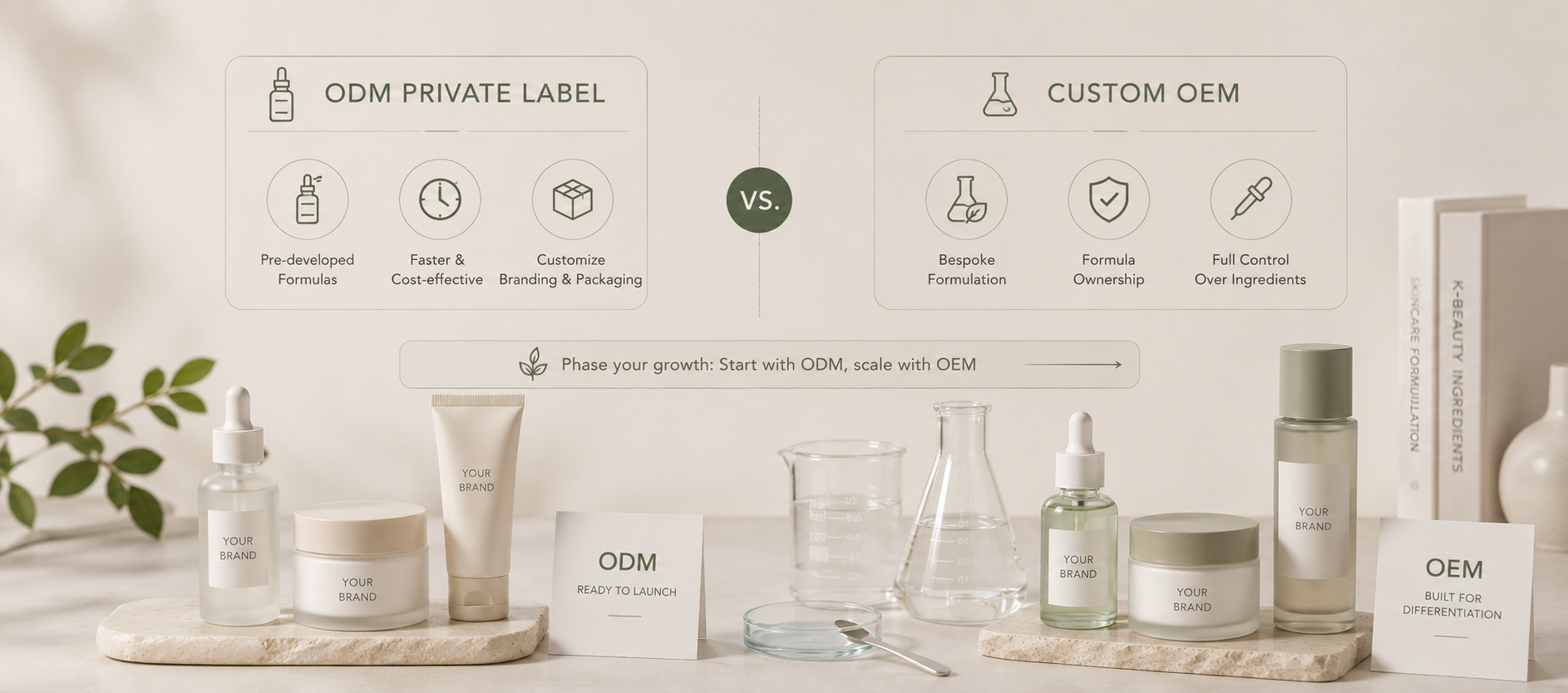
ODM Private Label: The manufacturer has already developed a catalog of tested, stable, and production-ready formulas. You select the formula that best fits your brand goals, then customize the branding, packaging, and labeling to make it your own. This is the faster and more budget-friendly route, and it is the most common starting point for first-time indie beauty founders. The trade-off is that the same base formula may be available to other brands, so your differentiation comes primarily from branding and positioning rather than formula exclusivity.
Custom OEM: You commission a formula developed specifically for your brand, with full control over ingredient selection, concentration levels, texture, fragrance profile, and performance claims. This path delivers complete formula ownership and maximum product differentiation, but requires more time, more budget, and a clearer technical brief than ODM. It is the right choice once you understand your market and are ready to invest in a truly proprietary product.
Many indie brands take a phased approach, launching with one or two ODM products to test the market and generate early revenue, then investing in custom OEM development as their brand grows and they better understand their consumer.
Step Three: Choose the Right Product Categories for Your Launch
One of the biggest advantages of working through custom skincare formulation Korea is the breadth of product categories available. Korean manufacturers produce across virtually every skincare format, giving indie brands the flexibility to build a product line that is genuinely differentiated from what is already on the market.
For indie beauty founders launching their first line, certain product categories offer stronger commercial starting points than others:
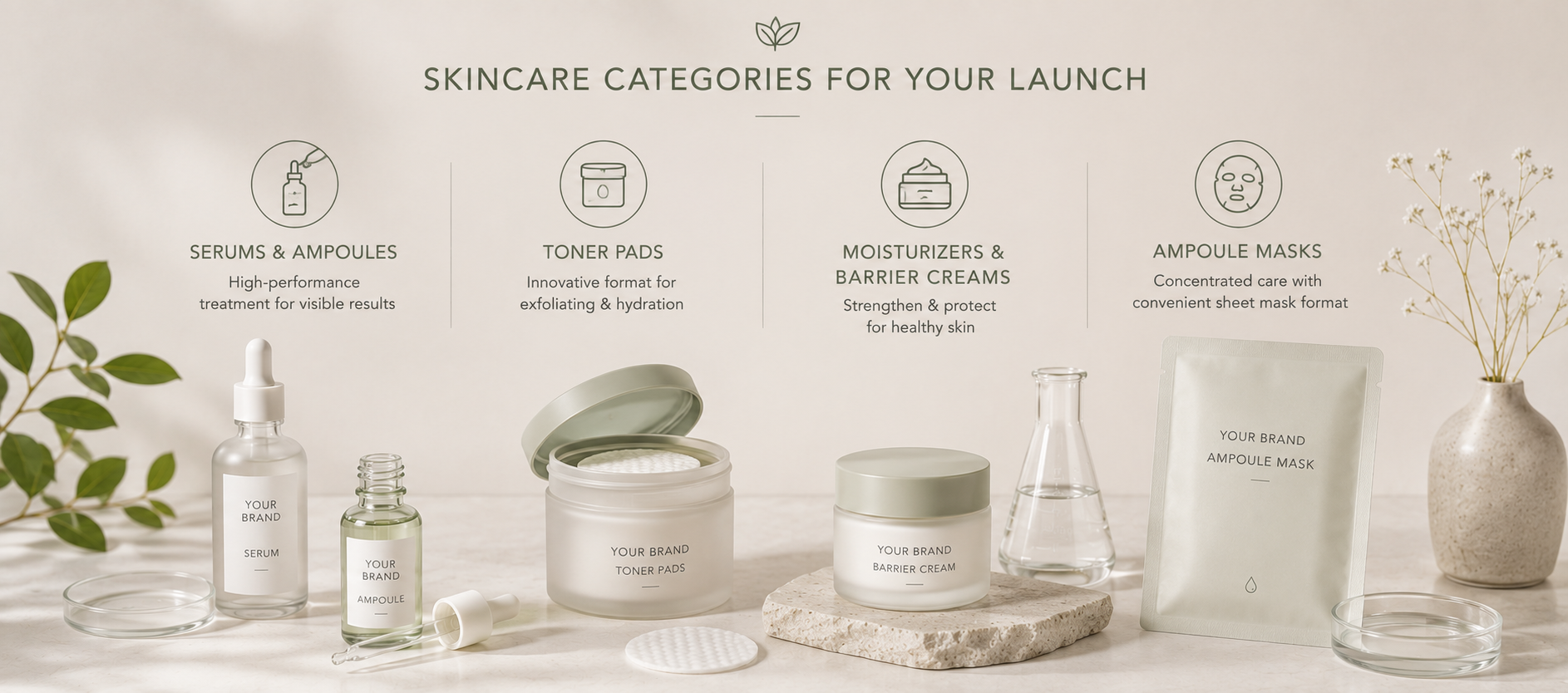
Serums and Ampoules: The serum and ampoule category offers the strongest combination of perceived value, margin potential, and formulation storytelling. Consumers associate serums with targeted, high-performance treatment, which supports premium pricing and builds brand loyalty when the product delivers results.
Toner Pads: Toner pads are a format that K-beauty popularized globally and that continues to perform strongly across multiple markets. They offer an innovative, tactile consumer experience and work particularly well for brightening, exfoliating, and hydration-focused formulations.
Moisturizers and Barrier Creams: Functional moisturizers with a clear skin benefit story, particularly around barrier repair, ceramide replenishment, or anti-aging support, represent a strong anchor product for indie brands targeting the growing derma and sensitive skin consumer segment.
Ampoule Masks: Combining the concentrated actives of an ampoule with the format convenience of a sheet mask, ampoule masks offer strong perceived value and excellent gifting and sampling potential for indie brands building initial consumer awareness.
Step Four: Evaluate Korean Manufacturing Partners Carefully
Not every Korean private label manufacturer is equally well suited to working with indie beauty brands. Some factories are structured primarily for large-volume production and have minimum order quantities that simply do not work for smaller brands. Others actively cater to indie founders and have developed processes specifically designed to support smaller brands through their first production experience.
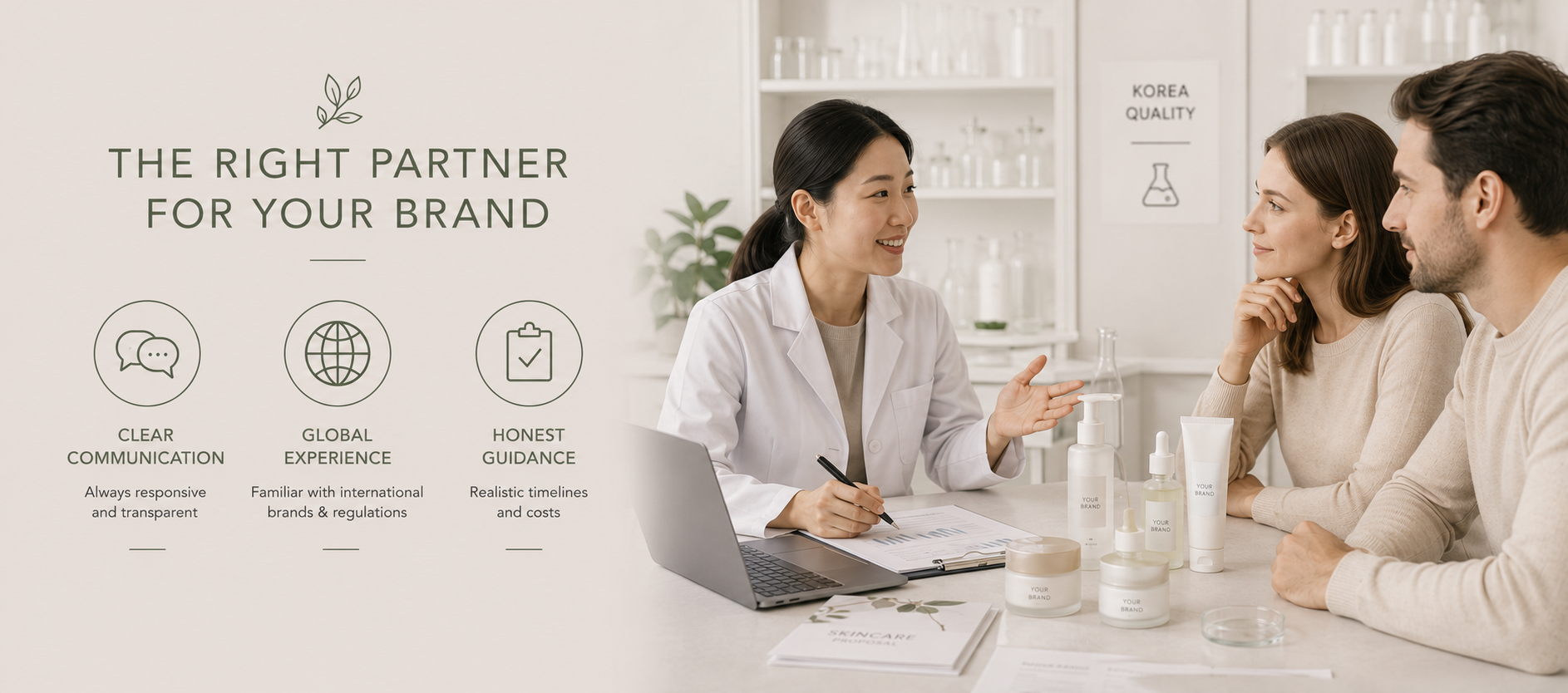
At Nutricare Cosmetic, we work as a genuine Korean beauty brand development partner for indie brands at every stage of their journey. Our team understands the specific challenges that independent founders face, from limited budgets and tight timelines to the need for clear, honest guidance on what is realistically achievable at different investment levels.
When evaluating any Korean manufacturing partner as an indie brand, look for these qualities:
Responsive and transparent communication: You should never have to chase your manufacturer for updates. A partner who communicates clearly and proactively from your first inquiry will serve you significantly better through the inevitable challenges of product development than one who goes quiet for weeks at a time.
Experience with international indie brands: Ask whether the manufacturer has worked with brands from your country or region before, and whether they understand the regulatory requirements for your target market. This experience makes the documentation and market entry process significantly smoother.
Honest guidance on timelines and costs: A trustworthy manufacturing partner will give you realistic expectations from the start rather than telling you what you want to hear to win your business. Unrealistic timeline or cost estimates at the start of a project almost always lead to disappointment and additional expense later.
Step Five: Plan Your Regulatory and Documentation Requirements Early
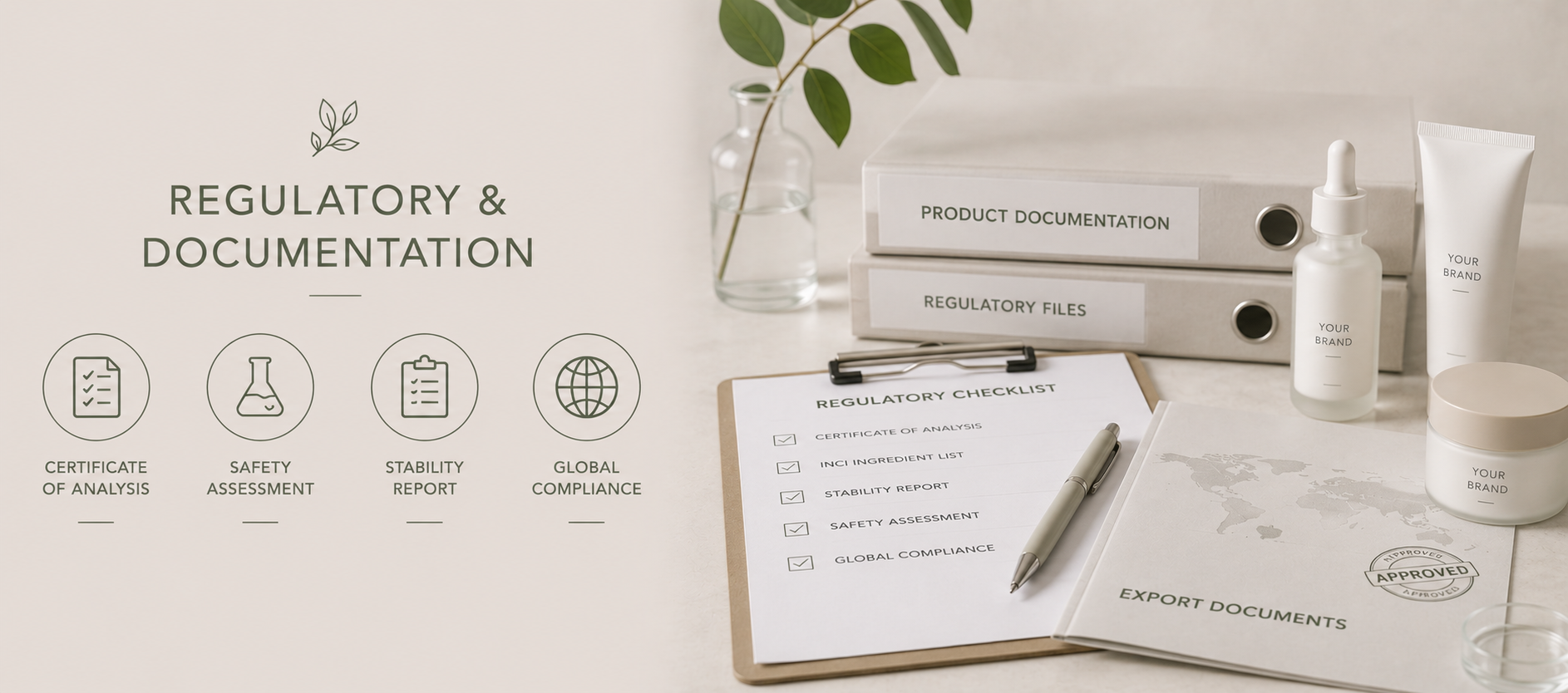
One of the areas where indie beauty founders most commonly run into delays is regulatory documentation. Different markets have different requirements for cosmetics import and sale, and preparing the right documentation takes time that needs to be built into your launch timeline from the beginning.
Korean manufacturers with strong international export experience will be familiar with the documentation requirements for major markets and can provide the Certificate of Analysis, INCI ingredient lists, stability reports, and safety assessments your products need to clear customs and meet retail listing requirements.
Do not leave this planning until after your products are ready to ship. Regulatory preparation should happen in parallel with production, not after it.
Building Your Brand for the Long Term
Launching a skincare brand through K-beauty private label manufacturing is the beginning of a brand building journey, not the end of one. The brands that succeed long term are those that treat their first product launch as a learning experience and use what they discover about their consumer to invest in deeper product development over time.
Korea’s manufacturing ecosystem supports this long-term approach. Whether you are launching your first single product or planning a complete skincare range, the flexibility, expertise, and ingredient access available through Korean OEM manufacturing gives indie brands the foundation to grow at whatever pace their market success supports.
Frequently Asked Questions
Q1. What is K-beauty private label manufacturing and how does it work for indie brands?
K-beauty private label manufacturing allows indie brands to launch skincare products produced by Korean OEM manufacturers under their own brand name. Brands choose from existing formulas or commission custom development depending on budget and differentiation goals.
Q2. What is the minimum order quantity for K-beauty private label manufacturing?
MOQs vary by manufacturer and product type. Many Korean manufacturers working with indie brands accept orders from 500 to 3,000 units per SKU, making professional Korean formulation accessible without requiring large initial inventory investment.
Q3. What is the difference between ODM and OEM for indie beauty brand founders?
ODM uses pre-developed formulas with custom branding for faster and more affordable market entry. OEM develops a completely custom formula from scratch, offering full formula ownership and higher differentiation at greater time and cost investment.
Q4. How long does it take to launch a skincare product through K-beauty private label manufacturing?
ODM private label projects can move to production in six to ten weeks. Custom OEM formulation typically takes three to six months from initial brief to finished product depending on formula complexity and revision rounds required.
Q5. Can Korean manufacturers help indie brands with regulatory documentation for international markets?
Yes. Experienced Korean manufacturers provide full regulatory documentation including Certificate of Analysis, INCI lists, stability reports, and safety assessments formatted for target markets including EU, USA, GCC, and Southeast Asia.