
The global skincare consumer has changed. Today’s buyer reads ingredient lists, researches actives before purchasing, and makes decisions based on what a formula actually contains rather than how a product is marketed. This shift has pushed brands worldwide to rethink their formulation strategies and invest in ingredients that deliver measurable, visible results backed by genuine scientific credibility.
South Korea has responded to this demand faster and more effectively than any other manufacturing region in the world. Three ingredients in particular have risen to the top of the global OEM request list coming into Korean manufacturers right now. Snow mushroom extract, EGF, and ceramides each represent a different dimension of advanced skincare science, and together they illustrate exactly why biotech skincare ingredients Korea manufacturing continues to attract brands from every corner of the global beauty market.
This blog covers what makes each of these ingredients so powerful, how Korean OEM manufacturers work with them, and why they represent strong formulation choices for brands building private label and custom skincare lines in today’s market.
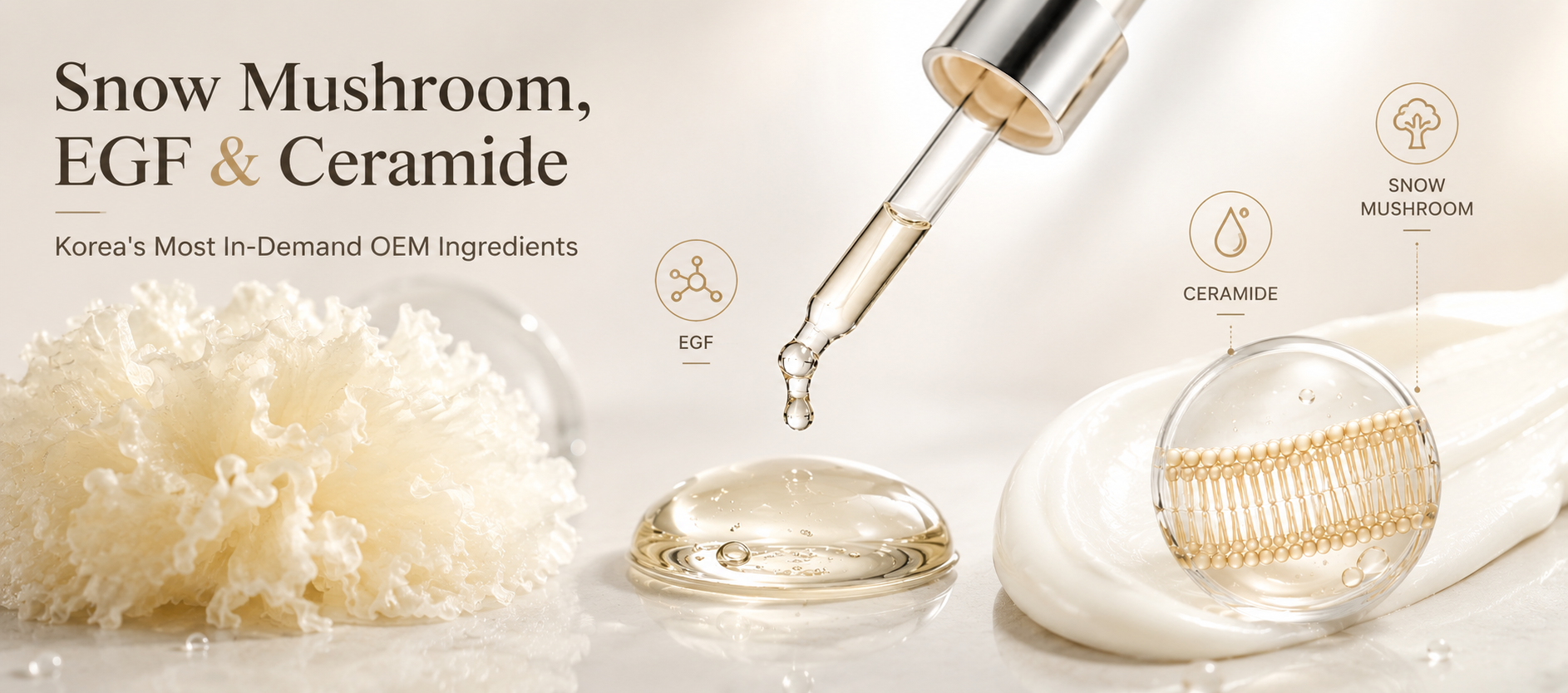
Snow Mushroom Extract: Nature-Derived Hydration That Outperforms the Classics
Snow mushroom, known scientifically as Tremella fuciformis, has been used in traditional Korean and Chinese wellness practices for centuries. What traditional practitioners understood intuitively, modern cosmetic science has now confirmed through research. Snow mushroom extract produces polysaccharides with smaller particle sizes than hyaluronic acid, allowing them to penetrate deeper into the skin and deliver more sustained moisture retention than many standard hydrating actives.
This makes snow mushroom extract skincare Korea OEM one of the most strategically valuable formulation choices available for brands building hydration-focused products. Consumers looking for nature-derived ingredients with clinical performance credentials find snow mushroom particularly compelling, as it bridges the gap between clean beauty positioning and genuine efficacy.
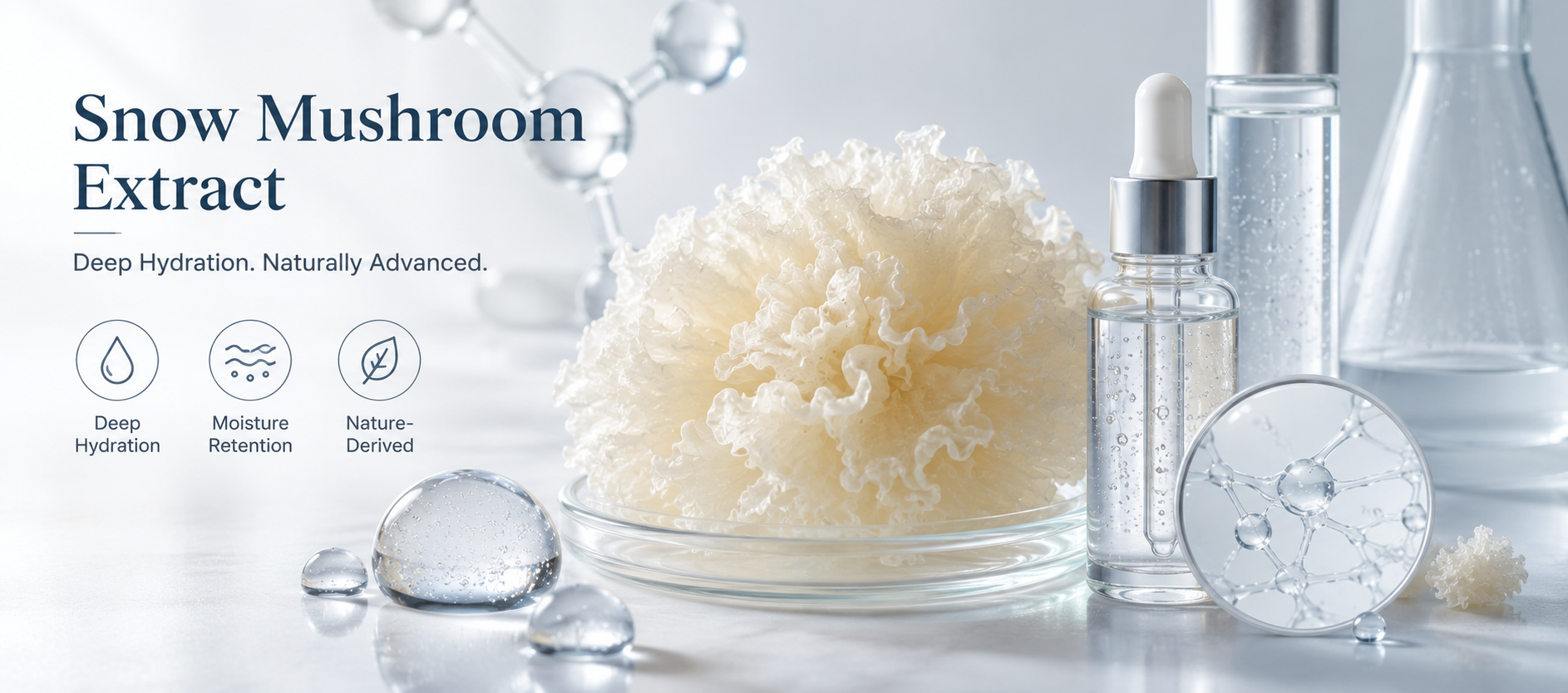
Snow mushroom polysaccharides work by forming a flexible film on the skin’s surface that holds moisture against the skin while simultaneously drawing water from the environment. This dual mechanism creates both immediate and sustained hydration effects that consumers can feel from the first application. Over consistent use, snow mushroom also contributes to improved skin plumpness, softness, and the kind of dewy, light-reflecting quality that has become synonymous with the Korean glass skin aesthetic.
Korean formulators work with snow mushroom extract across a wide range of product formats including toners, essences, serums, sleeping masks, and ampoules. Its gentle, non-irritating profile makes it suitable for sensitive skin formulations as well as mainstream hydration products, giving brands significant flexibility in how they position and target products built around this ingredient.
For brands entering the clean beauty or nature-derived skincare space, snow mushroom offers a particularly compelling entry point. It delivers the performance credentials that today’s ingredient-educated consumers demand while carrying an authentic natural origin story rooted in centuries of traditional use, a combination that is genuinely difficult to replicate with synthetic alternatives.
EGF: Biotech-Derived Skin Renewal for Premium and Professional Skincare Brands
EGF, or Epidermal Growth Factor, represents one of the most significant achievements of biotechnology applied to skincare formulation. Originally identified through Nobel Prize-winning research on cellular growth mechanisms, EGF is a protein that stimulates the proliferation and differentiation of skin cells, supporting the skin’s natural renewal process at a fundamental biological level.
In skincare formulation, EGF is typically produced through biotechnology processes that create a stable, cosmetic-grade version of this naturally occurring protein. EGF serum Korea private label manufacturing gives brands access to one of the most scientifically credible anti-aging and skin renewal ingredients available, backed by decades of research across both medical and cosmetic applications.
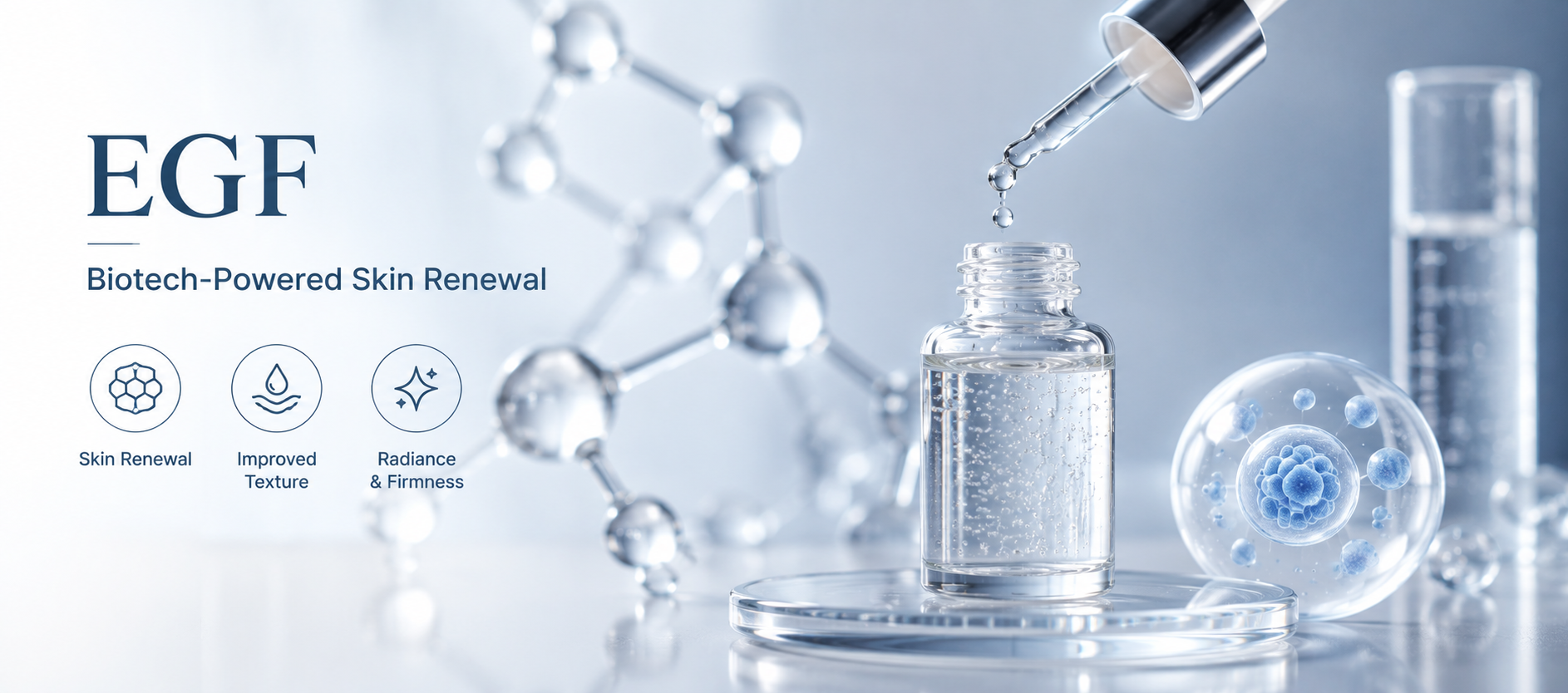
The primary benefits of EGF in skincare include accelerated cell turnover, improved skin texture and smoothness, visible reduction in fine lines and wrinkles over consistent use, and enhanced overall skin radiance. These benefits make EGF particularly well suited for brands targeting mature skin consumers, professional aesthetic channels, and premium anti-aging product positioning.
Korean manufacturers have been formulating with EGF for significantly longer than most other manufacturing regions, which gives them a meaningful advantage in understanding how to stabilize this delicate protein through production and shelf life. EGF is sensitive to temperature, pH, and certain formulation conditions that can degrade its activity if not carefully managed. Korean formulators with extensive EGF experience know how to navigate these challenges and deliver finished products that maintain ingredient potency through to the consumer.
For brands building in the premium, clinical, or medical spa channel, EGF formulations represent a strong foundation for product development. The ingredient carries strong professional recognition and growing consumer awareness, particularly among the skincare-educated demographic that actively researches ingredients and seeks out clinically credible products over marketing-driven alternatives.
Ceramide Barrier Repair: The Foundation of Derma and Sensitive Skin Formulation
While snow mushroom and EGF represent exciting frontiers in hydration and cellular renewal, ceramides address what is arguably the most fundamental and universal skin health concern in today’s market. The skin barrier has become a central conversation in modern skincare, and ceramides sit at the heart of every serious barrier repair formulation strategy.
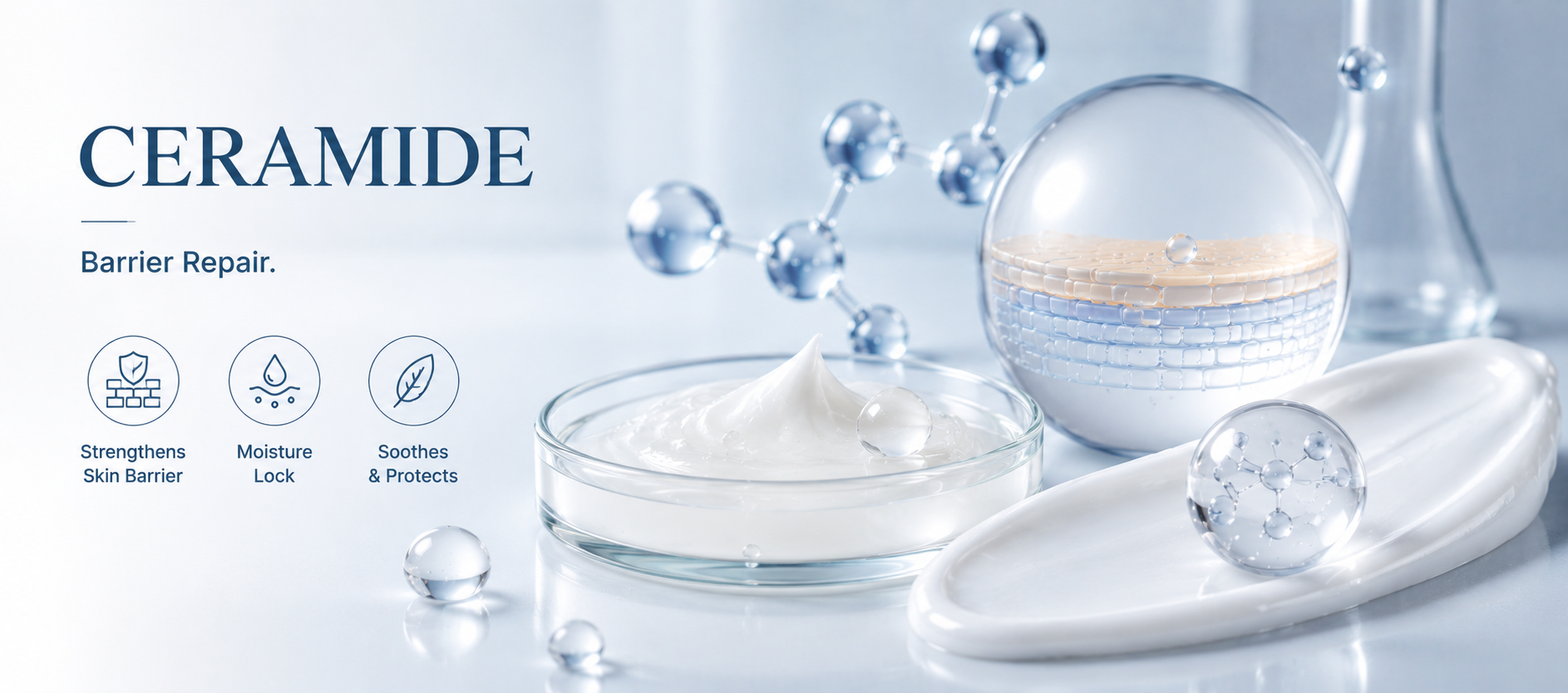
Ceramide barrier repair Korea OEM manufacturing works with lipid molecules that naturally occur in the skin’s stratum corneum, making up a significant portion of the barrier’s structural composition. When these ceramides are depleted through aging, environmental damage, harsh skincare practices, or underlying skin conditions, the barrier weakens and moisture loss accelerates. The result is skin that feels dry, tight, and reactive, and that responds poorly to other active ingredients in the routine.
Korean formulators approach ceramide formulation with a level of scientific precision that distinguishes their work from simpler ceramide products. Rather than incorporating a single ceramide type at a token concentration, advanced Korean ceramide formulations use multiple ceramide types in carefully calibrated ratios that mimic the natural lipid composition of healthy skin. This biomimetic approach delivers more effective barrier restoration than single-ceramide formulas because it addresses the full spectrum of lipid depletion rather than just one aspect of it.
Ceramide formulations are also highly versatile from a brand positioning perspective. They work equally well in products targeting mature skin, sensitive and reactive skin, eczema-prone skin, post-procedure recovery, and even everyday maintenance products positioned around preventive barrier care. This broad applicability makes ceramide barrier repair one of the most commercially flexible formulation foundations available through Korean OEM manufacturing.
Exosome Technology: The Next Layer of Korean Biotech Skincare Innovation
Sitting alongside these three established hero ingredients is a newer biotech technology that is rapidly becoming one of the most requested actives in Korean OEM skincare development. Exosome skincare Korea OEM manufacturing works with nanoscale vesicles derived from stem cells that carry growth factors, proteins, and signaling molecules used for cell-to-cell communication.
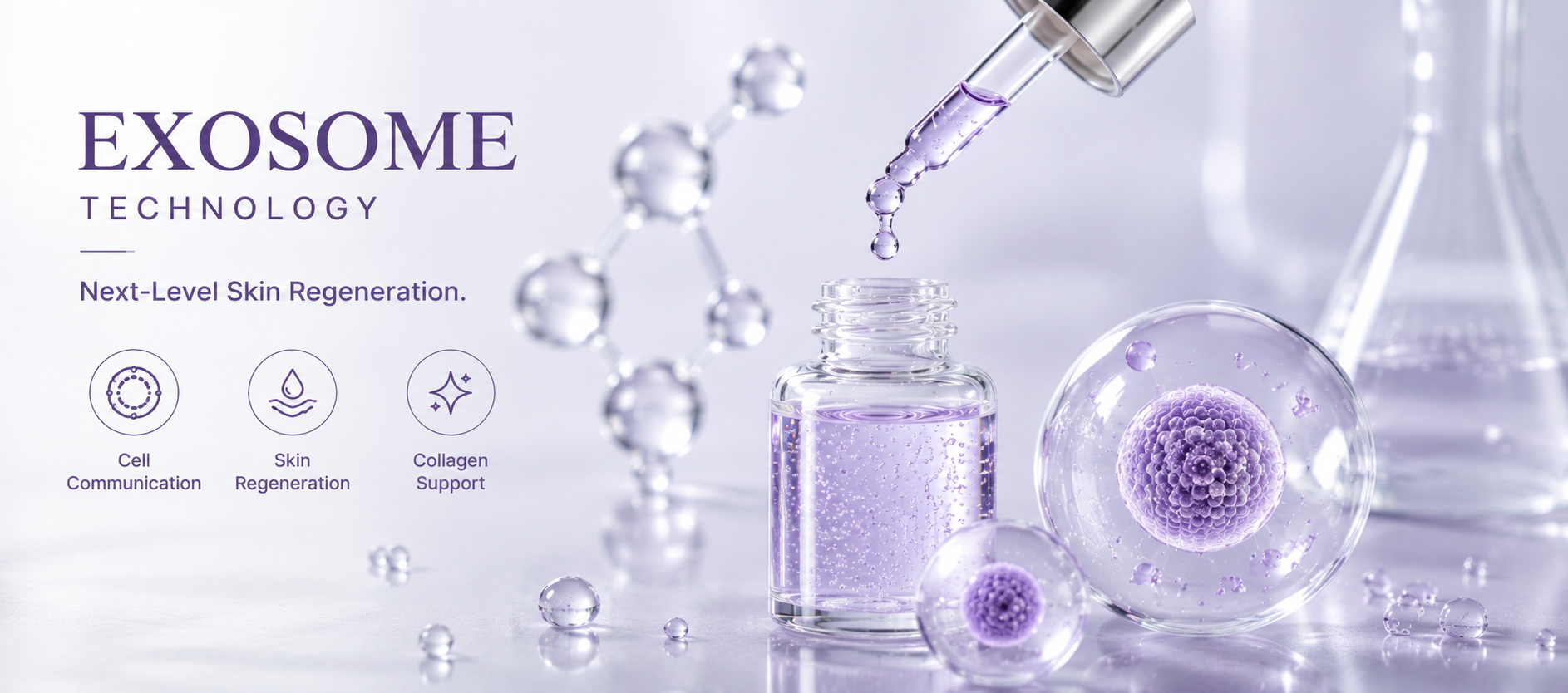
In skincare applications, exosomes work by delivering their bioactive cargo directly to skin cells and triggering regenerative responses including collagen synthesis, barrier repair, and cellular renewal. Their extremely small size allows them to penetrate the skin more effectively than many other large molecule actives, and their biological origin means they communicate with skin cells in ways that synthetic ingredients cannot fully replicate.
For brands building at the premium end of the anti-aging, regenerative, or post-procedure skincare market, exosome technology represents the current frontier of what Korean biotech formulation can offer. Korean manufacturers have invested significantly in exosome stabilization and delivery technology, making them the most capable and experienced production partners for brands wanting to incorporate this ingredient at a professional level.
Building a Product Line Around These Four Ingredients
Each of these ingredients addresses a distinct dimension of skin health: snow mushroom for deep hydration, EGF for cellular renewal, ceramides for barrier integrity, and exosomes for advanced regeneration. Together they provide a formulation framework for a complete, science-backed skincare line that can credibly address multiple consumer concerns across different product steps.
At Nutricare Cosmetic, our formulation team works with brands to build product architectures that use these ingredients strategically across a range of SKUs, ensuring each product has a distinct role in the routine while the overall line tells a coherent, ingredient-led brand story. Whether you are building a single hero product or a complete skincare system, our Korean OEM manufacturing capabilities give you access to these advanced ingredients at the formulation quality and production precision your brand deserves.
Final Thoughts
Snow mushroom, EGF, ceramides, and exosomes represent four of the strongest ingredient opportunities available through Korean OEM skincare manufacturing right now. Each one carries genuine scientific credibility, strong consumer appeal, and broad market applicability across different brand positioning strategies.
Korea’s depth of experience working with each of these ingredients, combined with the manufacturing infrastructure to produce them consistently at commercial scale, makes Korean OEM manufacturing the most reliable and strategically sound choice for brands serious about building with these actives at the center of their formulation strategy.
Frequently Asked Questions
Q1. Why is snow mushroom extract considered superior to hyaluronic acid for skin hydration?
Snow mushroom polysaccharides have smaller particle sizes than hyaluronic acid, allowing deeper skin penetration and more sustained moisture retention. They also appeal to clean beauty consumers due to their natural origin and centuries of traditional use.
Q2. What makes EGF a premium ingredient for anti-aging skincare formulations?
EGF stimulates skin cell renewal and collagen production at a biological level, delivering visible improvements in skin texture, fine lines, and radiance. Its Nobel Prize-winning scientific origins give it strong credibility in professional and premium skincare channels.
Q3. How do Korean manufacturers approach ceramide formulation differently from standard OEM producers?
Korean formulators use multiple ceramide types in biomimetic ratios that mirror the skin’s natural lipid composition. This precision approach delivers more comprehensive barrier restoration than single-ceramide formulations used by less specialized manufacturers.
Q4. What is exosome technology and how is it used in Korean OEM skincare formulations?
Exosomes are stem cell-derived nanoscale vesicles that deliver growth factors and signaling molecules to skin cells. Korean manufacturers use them in premium anti-aging and regenerative formulations where their deep penetration and biological signaling capabilities deliver advanced results.
Q5. Can snow mushroom, EGF, ceramides, and exosomes be used together in a single skincare line?
Yes. These four ingredients address different dimensions of skin health and work effectively across different products within a complete skincare line. Korean formulators can help brands build a strategic product architecture using all four ingredients cohesively.