
Building a private label skincare brand is one of the most exciting business decisions you can make in today’s beauty market. Consumer demand for high-performance, ingredient-led skincare has never been stronger, and the brands that are winning are those built on genuine formulation quality rather than surface-level marketing claims.
The single most important decision you will make in your brand-building journey is choosing who manufactures your products. The right manufacturing partner determines the quality of your formula, the credibility of your ingredient story, the speed of your market entry, and the long-term scalability of your brand. For a growing number of beauty entrepreneurs worldwide, that decision points clearly and consistently toward one destination: a Korean cosmetics OEM manufacturer.
Here are the five most compelling reasons why Korean OEM manufacturing is the strongest foundation you can build your private label brand on.
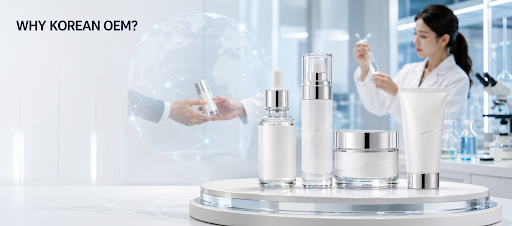
Korean cosmetics OEM manufacturers can support private label brands through advanced formulation, structured quality control, OEM and ODM development options, packaging guidance, and export-related documentation. Brands should compare verified certifications, product expertise, MOQs, testing capabilities, timelines, and target-market experience before choosing a manufacturing partner.
Reason 1: Access to the World’s Most Advanced Skincare Formulation Science
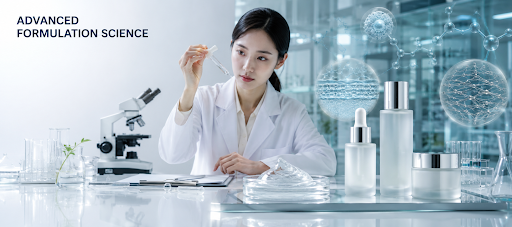
Korea did not become the global center of skincare innovation by following trends. It became the leader by consistently creating them. Korean manufacturers invest more heavily in cosmetic research and development than manufacturers in virtually any other region, combining dermatological science, biotechnology, and traditional botanical knowledge into formulations that routinely set the global standard for ingredient efficacy and product performance.
When you partner with a K-beauty contract manufacturing facility, you gain direct access to this formulation ecosystem. This means your brand can incorporate ingredients like exosomes, PDRN, advanced peptide complexes, fermented bioactives, ceramide systems, and snow mushroom polysaccharides into products that carry genuine scientific credibility rather than relying on ingredient name recognition alone.
This access to cutting-edge formulation science levels the playing field between small private label brands and large established companies in a way that manufacturing in other regions simply cannot match. A well-formulated product developed through Korean OEM manufacturing can compete directly with products from significantly larger brands on the basis of genuine ingredient quality and performance, which is exactly the kind of competitive position that builds lasting brand equity.
The depth of Korean formulation expertise also means your manufacturing partner can guide ingredient selection based on actual scientific understanding rather than trend-following. This guidance is particularly valuable for brand founders who are not formulation scientists themselves and need a manufacturing partner who can translate their product vision into a formula that genuinely delivers the results their brand story promises.
Reason 2: GMP Certified Production That Protects Your Brand and Your Consumers
Manufacturing quality is not something you can compromise on as a brand owner. A single quality issue, whether it is a contaminated batch, an unstable formula that separates on shelf, or an ingredient interaction that causes consumer reactions, can permanently damage a brand’s reputation regardless of how strong its marketing and positioning are.
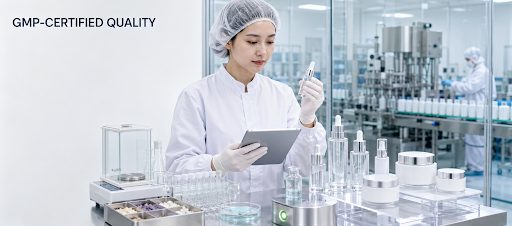
Choosing a GMP certified cosmetics manufacturer Korea gives your brand the protection of internationally recognized manufacturing standards that govern every aspect of production from raw material inspection through to final batch testing and release. GMP, or Good Manufacturing Practice, is not a marketing claim. It is an audited, documented quality system that must be maintained and verified through regular third-party inspections.
What GMP certification means practically for your brand includes consistent product quality across every production batch, documented ingredient sourcing and handling protocols that protect the integrity of your active ingredients, validated production processes that prevent cross-contamination and ensure fill accuracy, and thorough batch testing before products are released for shipment.
For private label brands entering international markets, GMP certification from your Korean manufacturer is often a prerequisite for customs clearance, retail listing requirements, and distribution partnerships. Having this documentation readily available removes significant barriers from your market entry process and allows you to move faster and more confidently than brands working with uncertified manufacturers.
Beyond compliance, GMP certification gives your brand a credible quality story to tell consumers, retailers, and professional buyers who increasingly require proof of manufacturing standards before they will engage with new brands. In a market where consumer trust is hard to earn and easy to lose, building your brand on GMP certified Korean manufacturing is one of the most defensible strategic positions available.
Reason 3: A True Brand Development Partnership That Goes Beyond Production
The best Korean OEM manufacturing relationships are not transactional. They are genuine brand development partnerships where the manufacturer’s team is invested in your brand’s success rather than simply processing your orders and collecting payment.
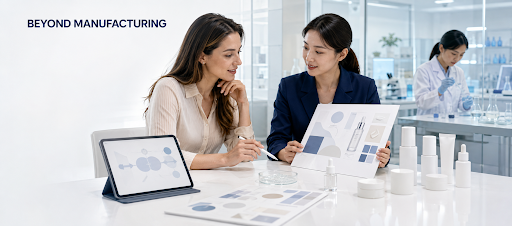
A genuine Korean beauty brand development partner brings value across every stage of your brand’s development journey, not just at the production stage. This includes helping you define the right formulation direction for your target consumer, selecting ingredients that support both your efficacy goals and your brand positioning, guiding packaging decisions that balance aesthetic appeal with formula compatibility and cost efficiency, and preparing the regulatory documentation you need to enter your target markets with confidence.
This partnership approach is particularly valuable for brand founders who are launching their first product or entering a new product category for the first time. Having a manufacturing partner who can explain the development process clearly, provide honest guidance on what is achievable at your budget level, and help you avoid the costly mistakes that inexperienced brand builders commonly make is worth considerably more than a lower unit cost from a factory that treats every client as an interchangeable production order.
At Nutricare Cosmetic, our brand development approach is built around long-term partnership rather than transactional manufacturing. We work with brands from initial concept through to finished product delivery, providing strategic guidance and technical expertise at every stage of the development process. Whether you are building your first single hero product or planning a complete skincare system, our team invests in understanding your brand’s goals and translating them into products that genuinely achieve them.
Reason 4: Flexible Entry Points That Make Professional Formulation Accessible
One of the most persistent misconceptions about Korean OEM manufacturing is that it is only accessible to large brands with significant production budgets and high-volume order commitments. This was perhaps true of certain large-scale Korean manufacturing facilities a decade ago. It is not an accurate picture of the Korean OEM landscape today.
Korean manufacturers supporting K-beauty private label skincare development have developed flexible programs specifically designed to accommodate brands at different stages of growth. This includes ODM private label routes that give brands access to existing, tested formulas with custom branding at lower development costs and faster timelines, as well as custom OEM development programs that provide complete formula ownership at investment levels that scale from indie brand budgets to large-scale production.
The flexibility of modern Korean OEM manufacturing means you can start where your current budget and market confidence allow and scale your production and formulation investment as your brand grows. Many successful private label brands begin with one or two ODM products that allow them to test market response quickly, then invest in custom OEM formulation as they develop a clearer understanding of their consumer and are ready to build a truly proprietary product line.
This phased approach to brand building through Korean OEM manufacturing is not a compromise. It is a strategically sound way to manage the inherent risk of launching a new brand while still accessing the formulation quality and ingredient standards that Korean manufacturing delivers. The brands that build most successfully through this model are those that enter the relationship with a clear long-term vision and a manufacturing partner who can support their growth at every stage rather than locking them into a single development path.
Reason 5: Regulatory Readiness for International Markets Built Into the Process
One of the most significant practical advantages of working with an experienced Korean cosmetics OEM manufacturer is the regulatory readiness that comes built into the manufacturing relationship. Entering international markets with cosmetic products requires specific documentation that varies by country and region, and preparing this documentation incorrectly or incompletely is one of the most common causes of launch delays and import complications for private label brands.
Experienced Korean manufacturers have established documentation frameworks for the world’s major cosmetics markets including the EU, USA, GCC, Southeast Asia, Australia, and Japan. This means that the
Certificate of Analysis, INCI ingredient lists, stability testing reports, safety assessments, and manufacturing facility certifications that your target market requires are produced as a standard part of the manufacturing process rather than needing to be assembled separately after production is complete.
For private label brands targeting multiple international markets simultaneously, this regulatory readiness from their Korean manufacturing partner can save months of preparation time and eliminate the cost of engaging external regulatory consultants to piece together documentation that an experienced manufacturer should be providing as standard.
Korea’s long history as a major cosmetics exporting nation means that its manufacturers have processed import documentation for virtually every major market and understand the specific requirements, claim language restrictions, and compliance nuances that differ between regions. This accumulated regulatory knowledge is a genuine competitive advantage that Korean OEM manufacturers offer private label brands over manufacturers in countries with less international export experience in the cosmetics category.
How to Get Started with Korean OEM Manufacturing for Your Private Label Brand
Understanding why Korean cosmetics OEM manufacturing is the right choice for your private label brand is the first step. Taking that knowledge into action requires a clear approach to identifying the right manufacturing partner and beginning the development process effectively.
Start by defining your brand clearly before approaching any manufacturer. Know your target consumer, your product positioning, your hero product concept, and your realistic budget for development and initial production. The more specific and honest your brief, the more productively your first conversations with potential manufacturing partners will be.
Research potential Korean OEM partners carefully, looking for GMP certification, demonstrated experience in your product category, clear international export experience relevant to your target markets, and a communication style that suggests genuine partnership rather than purely transactional manufacturing.
Request samples, ask for references from brands in similar categories, and take the time to evaluate how the manufacturer communicates during your initial conversations. A partner who is responsive, transparent, and genuinely interested in understanding your brand at the earliest stage will bring those same qualities to every subsequent stage of your development project.
Korea’s manufacturing ecosystem offers private label brands an entry point into the global skincare market that combines formulation quality, production credibility, regulatory readiness, and strategic support at a level that is genuinely difficult to replicate anywhere else in the world.
Frequently Asked Questions
Q1. Why choose a Korean cosmetics OEM manufacturer?
Korean cosmetics OEM manufacturers are known for advanced skincare formulation, efficient product development, established quality-control systems, and experience supporting international beauty markets. The exact capabilities vary by manufacturer, so brands should verify certifications, formulation expertise, MOQs, export experience, and documentation support before selecting a partner.
Q2. What is the difference between Korean cosmetics OEM and ODM?
OEM generally involves developing and manufacturing a product according to a brand’s specific requirements. ODM typically uses an existing or manufacturer-developed formula that can be adapted through packaging, branding, fragrance, texture, or selected ingredients. ODM may offer a faster and more accessible route, while OEM provides greater customization.
Q3. Can small beauty brands work with Korean cosmetics manufacturers?
Yes. Some Korean manufacturing partners offer ODM programs, ready-developed formulas, and phased product-development options for emerging brands. Minimum order quantities, customization limits, development fees, and timelines vary by product and manufacturing partner and should be confirmed before development begins.
Q4. What should I check before selecting a Korean skincare manufacturer?
Brands should review the manufacturer’s quality certifications, relevant product experience, formulation capabilities, MOQ, development timeline, testing procedures, packaging support, communication process, and experience preparing documents for the intended export market.
Q5. What documents may be needed to export private label cosmetics?
Depending on the destination and product, brands may need an INCI ingredient list, Certificate of Analysis, stability or compatibility test results, safety-related documentation, manufacturing information, product specifications, and market-specific registration materials. Requirements should be verified for each target country.
Q6. How long does Korean cosmetics OEM development take?
The timeline depends on whether the project uses an existing ODM formula or requires custom OEM development. Formula revisions, stability and compatibility testing, packaging procurement, regulatory review, and production scheduling can all affect the launch date.
Q7. Does a Korean OEM partner guarantee regulatory approval?
No. A manufacturing partner may provide technical and production documents, but the brand or responsible party must confirm the final regulatory requirements for each destination market. Requirements differ by product category, claims, ingredients, and jurisdiction.